
How to Prepare for a Tattoo Appointment | Inksquad
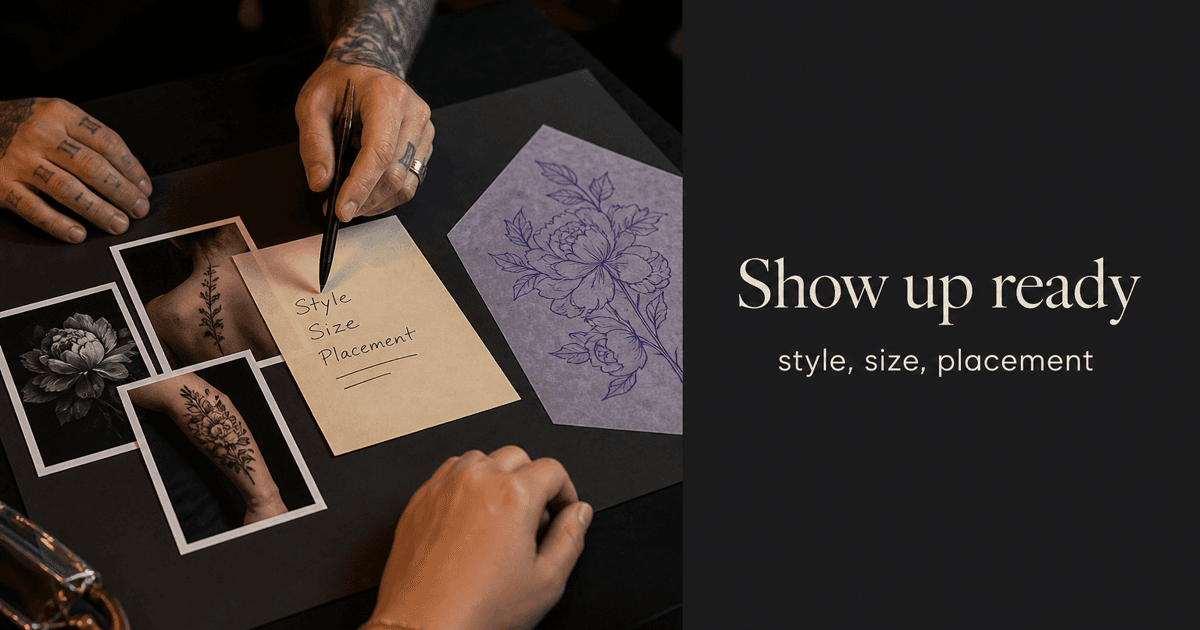
Arrive ready: style, size, placement, and two or three references. You do not need a ten-year plan. Talk it through with your tattoo artist first.
How do you prepare for a tattoo appointment?
You prepare for a tattoo appointment by deciding style, size, and placement, bringing two or three references, and talking those choices through with your tattoo artist. You do not need a ten-year plan for a whole collection. A good artist can keep later pieces coherent as you add them.
Pew Research Center found that 32% of US adults have a tattoo, including 22% who have more than one (Pew, 2023). Most people are not getting one piece and stopping. The useful question is how to show up ready for this session, not how to design the next decade.
What should you decide before you sit down?
Decide three things in writing: style, size, and body placement. If those stay only in your head, the artist is guessing.
Style is the first filter (fine line, realism, traditional, Japanese). Size is next. A design that looks right on a phone is often too small on an arm. Placement is the one people skip. A piece that works on a flat page can fail on a shoulder or a rib because the body moves.
How many tattoo references should you bring?
Bring two or three references, not twenty. Say what you like in each (the line, the contrast, the way it wraps) and what you do not want. That is enough for a first session.
A camera roll of forty screenshots is not a brief. It is a pile. The artist needs a clear intent, not a mood with no edges.
Do you need a full tattoo map before your first piece?
No. You can start without a perfect map if you pick an artist who will guide how new work fits with what is already there.
Some collections look chaotic. Some look planned. Neither is automatically right. Taste is personal. What usually causes regret is skipping the conversation, not “too many” tattoos.
What should you do if the stencil looks wrong?
Say so before the machine starts. If the stencil looks wrong standing in the mirror, ask to redraw it. Artists would rather fix placement on paper (or on the stencil) than repair it in skin.
The first session is where bad placement gets locked in. Standing up, looking in a full-length mirror, and checking size against the body is part of the appointment, not a delay.
First tattoo or adding to a collection: what changes?
If it is your first tattoo, you can start small. You do not need a back piece planned on day one.
If you already have work, bring photos of it. Even the pieces you are unsure about. The artist needs to see what is already there, not only the new idea.
What questions should you ask a tattoo artist?
Ask: have you done this style, at this size, on this body part? How many sessions will it take? If I already have tattoos, how would you make this sit with them?
Those three questions tell you more than a generic portfolio scroll. You are hiring judgement, not only a hand.
Where can you keep style, size, placement, and references in one place?
Scattered screenshots die in camera rolls. If you want one place for the style, the size, the body part, and the images, Inksquad Projects is built for that. You can add notes and a moodboard, then share the project with your artist when you are ready.
There is also a tattoo-specific AI in the app. Treat it as a sketchbook: a way to see an idea, not a replacement for the person who will put it on skin. Then book the artist.
FAQ
How do I prepare for my first tattoo appointment? Write down style, size, and placement. Bring two or three references. Eat, sleep, and leave time to check the stencil in the mirror before anyone starts.
What should I bring to a tattoo artist? Photos of work you already have, two or three references for the new piece, and a short note on what you like and what you refuse. That beats a folder of half-decisions.
Is it bad to get a tattoo without a long-term plan? No. Starting without a perfect map is fine if the artist can guide how new work fits with what is already there.
Новости, тренды и обновления тату
Upcoming events. New Inksquad’s apps releases. Stunning Artists and Tattoos.
How to Prepare for a Tattoo Appointment | Inksquad
Arrive ready: style, size, placement, and two or three references. You do not need a ten-year plan. Talk it through with your tattoo artist first.
Investment Piece vs. Budget Tattoo: Why Quality Matters for Permanent Art
Explore why investing in quality tattoos matters: ink safety, artist skill, premium pigments, long-term value, and how Inkaholik Miami delivers investment-quality artwork across three locations.

Реалистичные портреты на коже
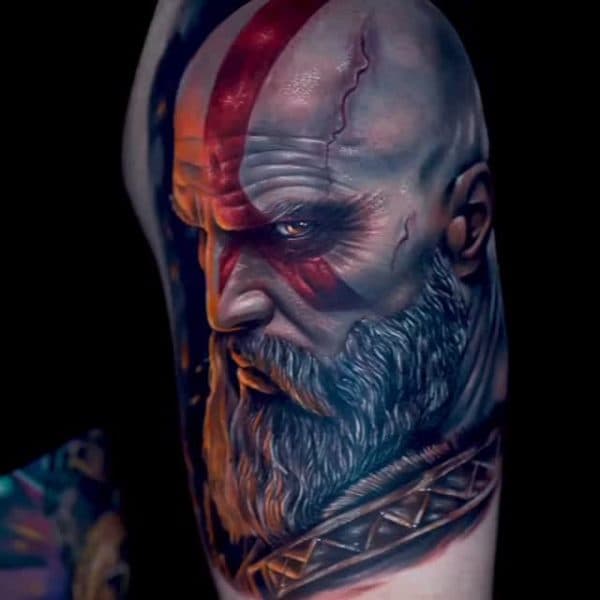
Реалистичный портрет в татуировке — это для каждого тату-мастера вызов, в котором нужно найти баланс между точностью и чувствительностью: точность, связанная с верностью создаваемого изображения, и чувствительность в личной интерпретации, в способности глаза художника уловить выражение, конкретную деталь.